Pigeon
Cf.
- human-wildlife conflict and coexistence
- urban ecology
- evolution in urban environments1
- human-animal studies
- animal ethics
- plasticity and adaptation in urban wildlife
- pigeon fancying
- racing pigeons
- pigeon lofts, pigeon towers, dovecotes, pigeonholes, columbaria
- bird netting, spikes, slopes, and other deterrents
Ethics
Donaldson, Sue, and Will Kymlicka. Zoopolis: A Political Theory of Animal Rights. New York: Oxford University Press, 2011. Emel, Jody, Chris Wilbert, and Jennifer R. Wolch. “Animal Geographies.” Society & Animals 10, no. 4 (2002): 407–12. https://doi.org/10/cf9n94.
Jerolmack, Colin. “How Pigeons Became Rats: The Cultural-Spatial Logic of Problem Animals.” Social Problems 55 (2008): 72–94. https://doi.org/10/c67nvr.
Martelli, Maria, and Paula Arcari. “Careful Care towards Animal Liberation for Feral Pigeons and Beyond.” In Heterotopia, Radical Imagination, and Shattering Orders, 44–60. London: Routledge, 2024.
Palmer, Clare. Animal Ethics in Context. New York: Columbia University Press, 2010.
Health and Other Challenges
Haag-Wackernagel, Daniel, and Holger Moch. “Health Hazards Posed by Feral Pigeons.” Journal of Infection 48, no. 4 (2004): 307–13. https://doi.org/10/fkd77b.
Angelici, Francesco Maria, and Lorenzo Rossi, eds. Problematic Wildlife II: New Conservation and Management Challenges in the Human-Wildlife Interactions. Cham: Springer, 2020.
Interactions Including Feeding
Burt, Sara A., Cornelis J. Vos, Jan A. Buijs, and Ronald J. Corbee. “Nutritional Implications of Feeding Free-Living Birds in Public Urban Areas.” Journal of Animal Physiology and Animal Nutrition 105, no. 2 (2021): 385–93. https://doi.org/10/hbdqjx.
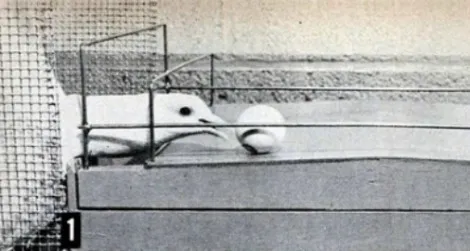
They can read, play ping pong, and recognise human faces. B.F. Skinner: The Man Who Taught Pigeons to Play Ping-Pong and Rats to Pull Levers
Design, Management, and Planning
Apfelbeck, Beate, Robbert P. H. Snep, Thomas E. Hauck, Joanna Ferguson, Mona Holy, Christine Jakoby, J. Scott MacIvor, Lukas Schär, Morgan Taylor, and Wolfgang W. Weisser. “Designing Wildlife-Inclusive Cities That Support Human-Animal Co-Existence.” Landscape and Urban Planning 200 (2020): 103817. https://doi.org/10/gg73mt.
Bodden, Shawn. “The Public Lives of Pigeon Passengers: How Pigeons and Humans Share Space on a Train.” In Winged Worlds, edited by Olga Petri and Michael Guida, 136–50. London: Routledge, 2023.
Jerolmack, Colin. The Global Pigeon. Chicago: The University of Chicago Press, 2013.
Johnston, Richard F., and Marián Janiga. Feral Pigeons. New York: Oxford University Press, 1995.
Arty
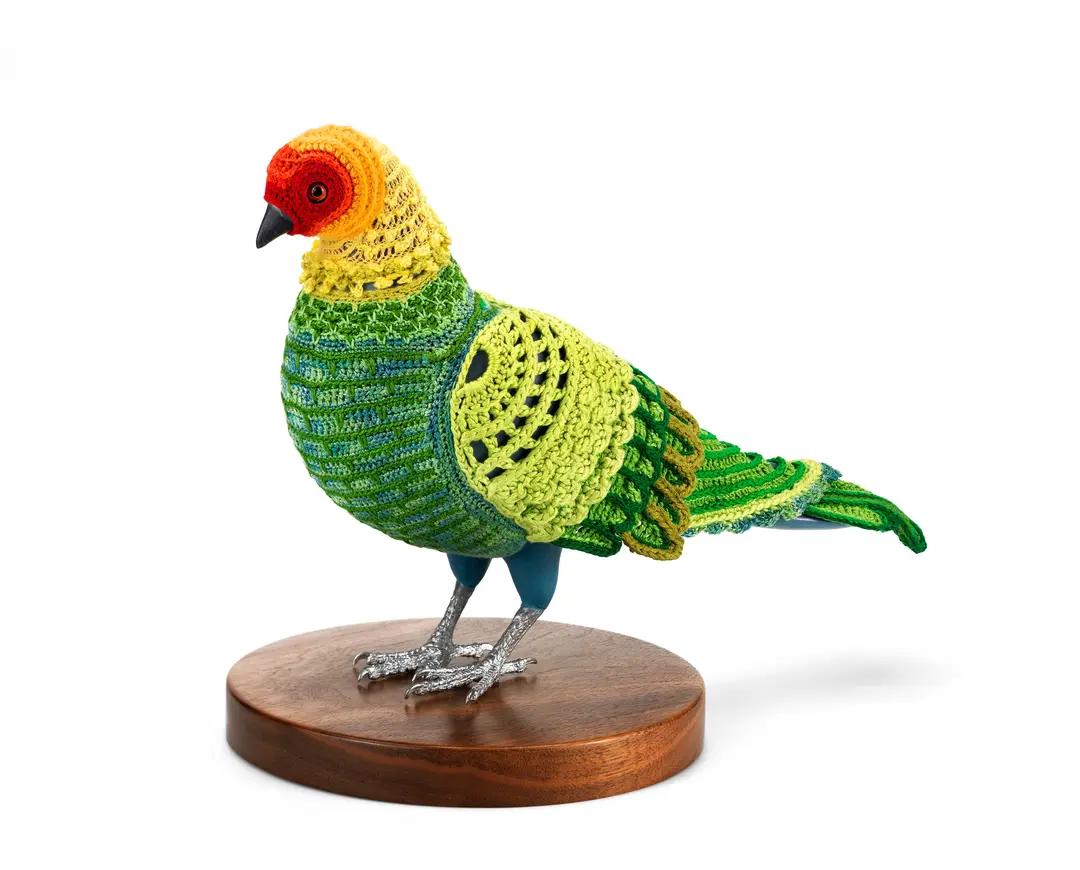
Biodiversity Reclamation Suits for Urban Pigeons | Smithsonian Kaleidoscope: Patterns of Resilience
Other
Capoccia, Stella, Callie Boyle, and Tedd Darnell. “Loved or Loathed, Feral Pigeons as Subjects in Ecological and Social Research.” Journal of Urban Ecology 4, no. 1 (2018): 1–6. https://doi.org/10/gfvmw7.
Dunn, Robert R., Michael C. Gavin, Monica C. Sanchez, and Jennifer N. Solomon. “The Pigeon Paradox: Dependence of Global Conservation on Urban Nature.” Conservation Biology 20, no. 6 (2006): 1814–16. https://doi.org/10/bwvjxm.
Jerolmack, Colin. “How Pigeons Became Rats: The Cultural-Spatial Logic of Problem Animals.” Social Problems 55 (2008): 72–94. https://doi.org/10/c67nvr.
Juola, Marjo. “Weird Birds and Abandoned Places: Pigeons’ Role in Post-Industrial Settings.” TRACE ∴ Journal for Human-Animal Studies 10 (2024): 180–202. https://doi.org/10/g84qfk.
Rautio, Pauliina. “‘A Super Wild Story’: Shared Human–Pigeon Lives and the Questions They Beg.” Qualitative Inquiry 23, no. 9 (2017): 722–31. https://doi.org/10/gcsgt5.
Skandrani, Zina, Marion Desquilbet, and Anne-Caroline Prévot. “A Renewed Framework for Urban Biodiversity Governance: Urban Pigeons as a Case-Study.” Natures Sciences Societes Vol. 26, no. 3 (2018): 280–90. https://doi.org/10/gfws56.
Footnotes
Johnson, Mark T. J., and Jason Munshi-South. “Evolution of Life in Urban Environments.” Science 358, no. 6363 (2017): eaam8327. https://doi.org/10/ckws.˄